
Homeowners in the U.S. hold a huge amount of home equity. The total is now around $34.5 trillion. That is more than the entire U.S. economy produces in a year. It reflects how far prices have risen since the housing market hit bottom in 2012. For buyers, this sounds like good news. It is not.
Many sellers refuse to let go of even a small part of that equity. They put their homes on the market at extreme prices. Some ask 20 to 25 percent more than fair value. They wait for a buyer who will accept the price without question. This rarely happens.
Homes then sit unsold for months. Buyers walk away. They feel there are no deals worth chasing. The gap between asking price and reality keeps growing. This article will look at why sellers do this. It will also explain why they resist cutting their price even when no offers come in.
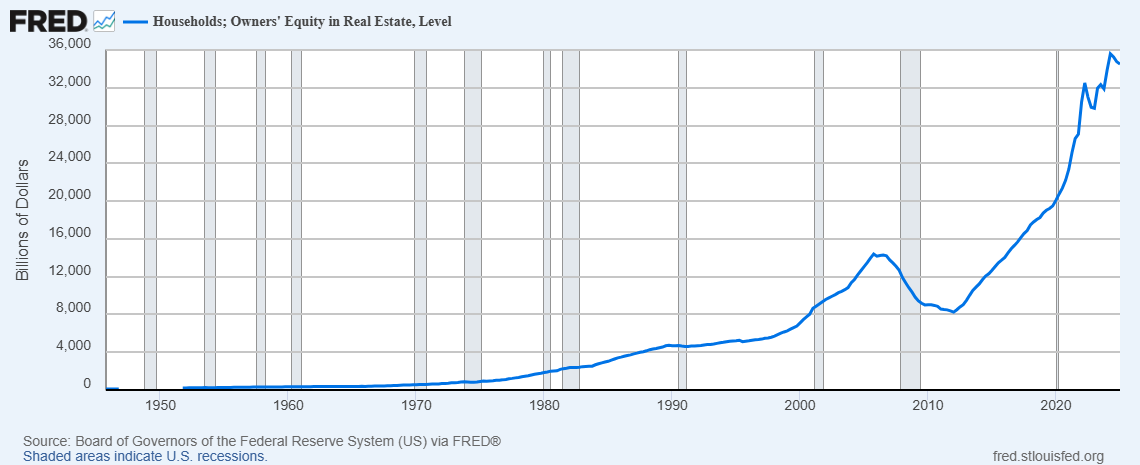
U.S. households’ owners’ equity in real estate from Q4 1945 to Q1 2025. Access the above graph here. [Link]
The climb has been steady. Since the housing downturn in 2012, equity has ballooned. It now sits at levels that dwarf past decades. The recent curve on the chart steepens sharply upward. The rise reflects strong price gains and declining mortgage debt. Homeowners today own a larger share of their homes outright. The rising equity offers financial power. It also shapes seller behavior.
In many cases, a sense of ownership and rising value make sellers cling to their price. That adds friction to the market. Buyers confront sellers who feel rich on paper. Yet they shy away from realistic expectations.
When a Home Feels Like Part of the Seller
Many sellers still live in the homes they list. They see them as more than walls and a roof. Every room carries memories. Family gatherings. Birthdays. Milestones.
Years of upkeep add to that bond. Fresh paint, new floors, or a remodeled kitchen all took time and money. These efforts build a personal price in the seller’s mind. It is not just a number. It reflects their pride. That price can be far above market value. Pointing this out can bring anger. It can also create mental conflict for the seller.
Buyers aiming for a discount should keep this in mind. A direct lowball offer may get ignored. A polite tone works better. Focus on what makes the home special. Praise the garden. Mention the view. Listing agents pass along these comments. Sellers listen. They are more open when they feel respected. That can make the difference in getting a deal.
The Price Standoff in a Downturn
A market works best when prices move with demand. If sellers eased their price goals, more homes would sell. Buyers would return. Sales would move faster. In a downturn, this rarely happens. Sellers hold tight to old values. They wait for the market to “come back.” That wait can last years.
The result is a housing market that stalls. Prices stop rising but do not drop enough to tempt buyers. Activity slows to a crawl. Low demand becomes the norm. Listings grow stale. Buyers lose interest. The few deals that close are often far from the asking price.
A better path is clear. Adjust prices early. Meet buyers in the middle. Keep the market moving. If sellers did this, downturns would be shorter. Confidence would stay higher. The gap between what sellers want and what buyers can pay would shrink. The market would feel alive, even in slower times.
Breaking Through Seller Resistance
Winning a deal below asking takes more than numbers. It starts with understanding the seller’s pride in their home. Respect their memories. Recognize the work they put in. Then, frame your offer with clear facts. Use recent sales, local trends, and forecasts. Keep your tone calm.
Praise the home before talking price. Look for signs of urgency, like an empty property or a quick move date. These details can shift the conversation. The goal is to open the door, not slam it. When sellers feel respected and informed, they are more likely to meet you partway. That’s where deals happen.
However, to stay ahead in the market, you need solid local data. Reventure Premium offers home price forecasts by ZIP code, showing where prices have been and where they may be headed for only $39/month. This insight helps buyers and investors time their offers and decide how far below asking they can go.